Farmington, Connecticut: Grand Central Station of the Underground Railroad
Farmington, Connecticut
Pictures from Farmington
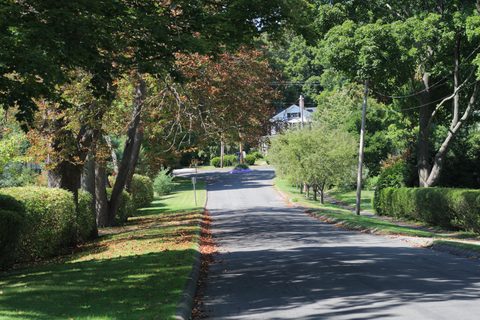
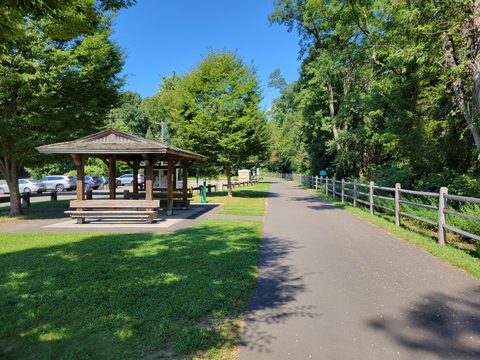
See all 3 photos →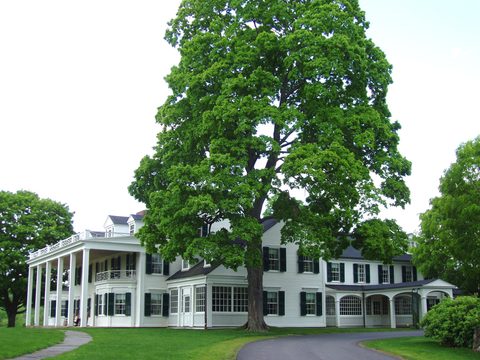
Farmington was settled in June 1640 by English colonists from Hartford on land the Tunxis people called Tunxis Sepus, or "bend of the little river"; the town and river took their present name at incorporation in December 1645. The Farmington Canal, linking New Haven and Northampton, Massachusetts, operated along the river's eastern bank from 1828 to 1848, and its corridor is now a recreational rail-trail. In the 1800s, Farmington became known as the "Grand Central Station" of Connecticut's Underground Railroad. After the 1841 Amistad trial, 38 Mende Africans and Cinqué, leader of the shipboard revolt, were housed and educated in Farmington while residents raised funds for their return to Africa; First Church of Christ, Congregational, established in 1652, commemorates the connection in its Amistad Hall. Educational reformer Sarah Porter founded Miss Porter's School, the girls' preparatory school whose alumnae include Jacqueline Kennedy Onassis, in the village center in 1843.
-
sight
A 1901 mansion with Impressionist paintings and a sunken garden.
-
sight
A circa-1720 National Historic Landmark living-history museum.
-
An 81-mile rail-trail on the old canal corridor to Massachusetts.
-
A 1652 meetinghouse with Amistad Hall commemorating the 1841 history.
-
Walking tour of Farmington's Underground Railroad and Amistad sites.
-
food
A five-time Wine Spectator Award of Excellence Italian bistro.
-
Craft beer and weekly specials on Farmington Avenue.
-
food
The Farmington Inn's complimentary guest-breakfast café.
-
The village's boutique inn near Routes 4 and 10.
Tunxis Sepus to the Underground Railroad
Farmington was settled in June 1640 by English colonists from Hartford on land the Tunxis people called Tunxis Sepus, 'bend of the little river'; the town and river took their present name at incorporation in December 1645. The Farmington Canal operated along the river's eastern bank from 1828 to 1848, linking New Haven with Northampton, Massachusetts, and its corridor is now the 81-mile Farmington Canal Heritage Trail. In the 1800s, Farmington became known as the 'Grand Central Station' of Connecticut's Underground Railroad, and after the 1841 Amistad trial, 38 Mende Africans and Cinqué, leader of the shipboard revolt, were housed and educated in town while residents raised funds for their return to Africa — a history First Church of Christ, Congregational commemorates in its Amistad Hall, and the Farmington Historical Society retraces on its Amistad walking tour. Sarah Porter founded Miss Porter's School, whose alumnae include Jacqueline Kennedy Onassis, in the village center in 1843.
Getting there
Farmington is a drive-to destination on Interstate 84, about 10 miles west of Hartford, reached via I-84's Farmington interchanges and state Routes 4, 10, and 177, plus US Route 6. There is no train station in town, so rail travelers take Amtrak or the CTrail Hartford Line to Hartford Union Station and drive or cab the last stretch.
Hill-Stead, the Canal Trail, and dinner on the Avenue
Hill-Stead Museum, a 1901 Colonial Revival mansion designed by pioneering architect Theodate Pope Riddle, hangs Impressionist paintings by Monet, Degas, Manet, Whistler, and Cassatt across 152 hilltop acres, with a Beatrix Farrand sunken garden that hosts the summer-long Sunken Garden Poetry Festival. The circa-1720 Stanley-Whitman House, a National Historic Landmark near the village center, interprets early colonial life with period gardens and an orchard. For food, Piccolo Arancio and Victoria's Café sit beside the Farmington Inn on Farmington Avenue, with Wood-n-Tap Bar & Grill down the road for craft beer and weekly specials; the Farmington Inn & Suites itself, near the junction of Routes 4 and 10, is the village's boutique hotel.
Frequently asked questions
- How do I get to Farmington?
- Farmington sits on I-84 about 10 miles west of Hartford, via the Farmington interchanges and state Routes 4, 10, and 177. There's no train station in town; rail travelers use Amtrak or the CTrail Hartford Line to Hartford Union Station.
- What is Hill-Stead Museum?
- A 1901 Colonial Revival mansion designed by Theodate Pope Riddle, with Impressionist paintings by Monet, Degas, Manet, Whistler, and Cassatt on 152 acres, plus a Beatrix Farrand sunken garden. Open Wednesday-Sunday 10 a.m.-4 p.m.
- What is Farmington's Amistad connection?
- After the 1841 Amistad trial, 38 Mende Africans and Cinqué were housed and educated in Farmington while residents raised funds for their return to Africa. First Church of Christ, Congregational and the Farmington Historical Society's walking tour both commemorate the history.
- What is Miss Porter's School?
- A girls' preparatory school founded in the village center in 1843 by educational reformer Sarah Porter; alumnae include Jacqueline Kennedy Onassis.
- Where can I eat and stay in Farmington?
- Piccolo Arancio is a longtime Italian bistro next to the Farmington Inn & Suites, with Wood-n-Tap Bar & Grill for craft beer down Farmington Avenue. The Farmington Inn & Suites, near Routes 4 and 10, is the village's boutique hotel, with Victoria's Café serving guests breakfast on site.
Foliage
Still green this week · estimated peak Oct 21–27
Derived from the Connecticut DEEP fall foliage map. DEEP's map is a climatological estimate last published in 2023; it describes a normal year, not this one. Stage names are ours. See the statewide forecast.
We can't find the internet
Attempting to reconnect
Something went wrong!
Hang in there while we get back on track
What travelers think
Connected pages
Nearby
-
Newington, Connecticut: World Headquarters of Amateur Radio
· Newington, Connecticut
The two towns share a border
- New Britain, Connecticut: The Hardware City · New Britain, Connecticut
-
Bristol, Connecticut: Clockmakers, Carousels and America's Oldest Amusement Park
· Bristol, Connecticut
The two towns share a border
-
Avon, Connecticut: A Canal Town Turned Farmington Valley Suburb
· Avon, Connecticut
Avon separated from Farmington's parish of Northington in 1750 and borders it to the south.
-
Burlington, Connecticut: West Britain's Woodlands and a Pink Tavern
· Burlington, Connecticut
Burlington's land was part of Farmington from 1645 until West Britain parish was set off.
-
Plainville, Connecticut: Connecticut's Oldest Airport and a Flying Governor
· Plainville, Connecticut
Plainville separated from Farmington in 1869 and borders it; Pinnacle Rock straddles the two towns.
-
West Hartford, Connecticut: From West Division to Webster's Birthplace
· West Hartford, Connecticut
Both sit along I-84 and Route 4, just west of Hartford.
Shared history
-
Plainville, Connecticut: Connecticut's Oldest Airport and a Flying Governor
· Plainville, Connecticut
Plainville was part of Farmington from the 1660s until it separated as its own town in 1869.
Same region
-
Simsbury, Connecticut: Copper Coins, Safety Fuses, and a Hilltop Tower
· Simsbury, Connecticut
Both are Farmington Valley towns in Hartford County.
-
Canton, Connecticut: The World's Leading Axe Maker at Collinsville
· Canton, Connecticut
Canton was incorporated in 1806 from land originally part of Simsbury, the same source-town as much of the Farmington Valley.