New London, Connecticut: The Whaling City's Harbor
New London, Connecticut
Pictures from New London
See all 3 photos →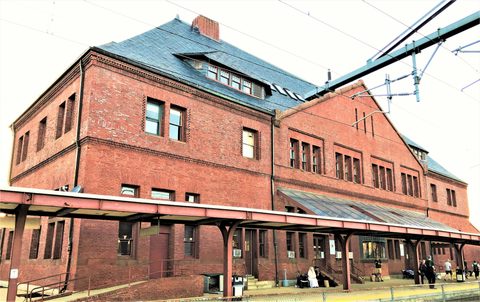
New London was founded in 1646 by John Winthrop Jr., who named it and its river — the Thames — after England's capital. Incorporated in 1784 as one of Connecticut's first five cities, it served as the colony's first official port and, by the nineteenth century, ranked as New England's second-largest whaling and sealing port by volume, earning the nickname "The Whaling City." The city's history includes hard blows: on September 6, 1781, British forces under the turncoat Benedict Arnold attacked Forts Trumbull and Griswold and burned the town. The schooner Amistad entered New London harbor in late August 1839, an event now commemorated inside the 1833 U.S. Custom House on Bank Street. Playwright Eugene O'Neill spent boyhood summers here at Monte Cristo Cottage. Today the U.S. Coast Guard Academy, Fort Trumbull, and Ocean Beach define a city still built around its harbor.
-
sight
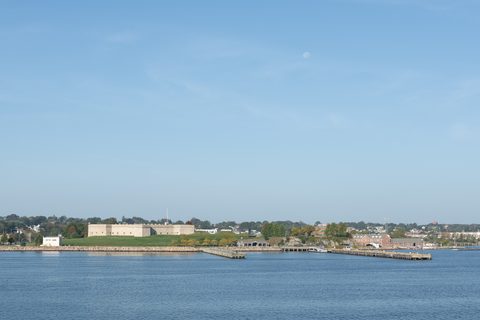
225+ years of military history on the harbor, from a site first fortified in 1777.
-
sight
American paintings and decorative arts since 1932.
-
sight
A 1926 downtown theater marking its centennial.
-
The 1833 Custom House, with a permanent Amistad exhibition.
-
sight
A city-owned boardwalk beach on Long Island Sound, open Memorial Day to Labor Day.
-
sight
An 1887 H.H. Richardson-designed station, still the city's rail hub.
-
A waterfront lobster-roll shack on Shaw's Cove since 1996.
-
food
A Pequot Avenue waterfront take-out stand, operating since 1972.
-
food
Family-run seafood and Italian dining with harbor views.
The Whaling City's harbor
New London was founded in 1646 by John Winthrop Jr., who named it and its river — the Thames — after England's capital. Incorporated in 1784 as one of Connecticut's first five cities, it served as the colony's first official port and, by the nineteenth century, ranked as New England's second-largest whaling and sealing port by volume, earning the nickname "The Whaling City." The city's history includes hard blows: on September 6, 1781, British forces under the turncoat Benedict Arnold attacked Forts Trumbull and Griswold and burned the town. The schooner Amistad entered New London harbor in late August 1839, an event now commemorated inside the 1833 U.S. Custom House on Bank Street — designed by architect Robert Mills and a museum since 1983. Playwright Eugene O'Neill spent boyhood summers here at Monte Cristo Cottage, preserved today by the Eugene O'Neill Theater Center.
Getting there
Drivers reach New London directly off I-95, with CT Routes 32 and 85 feeding the city. Train travelers arrive at the 1887 H.H. Richardson-designed Union Station (27-35 Water Street), served by about nine Amtrak Northeast Regional trains each direction daily (Acela no longer stops here) and by CTrail Shore Line East commuter trains from New Haven. Cross Sound Ferry connections to Long Island, Fishers Island, and Block Island depart steps from the station.
Forts, museums, and the harborfront
Fort Trumbull State Park, built 1839-1852 on a site first fortified in 1777, spans more than 225 years of military history on the harbor. The Lyman Allyn Art Museum, founded in 1932, and the Garde Arts Center, a 1926 downtown theater, anchor the arts scene, while Ocean Beach Park offers a city-owned boardwalk on Long Island Sound. Verified lodging inside New London's city limits was sparse when this guide was researched — Groton and Mystic to the east offer verified hotel options.
Frequently asked questions
- How do I get to New London?
- Drivers use I-95 with CT Routes 32 and 85 feeding downtown. By rail, Union Station (27-35 Water Street) has about nine Amtrak Northeast Regional trains each direction daily (Acela no longer stops) plus CTrail Shore Line East service from New Haven; Cross Sound Ferry connections depart nearby.
- Can I take the train from New London to New York?
- Yes — Amtrak Northeast Regional runs about nine trains each direction daily from Union Station toward New York on the Northeast Corridor. Acela no longer stops at New London.
- Why is New London called 'The Whaling City'?
- By volume, New London was New England's second-largest whaling and sealing port in the nineteenth century, a legacy that gave the city its nickname.
- What happened to New London during the Revolutionary War?
- On September 6, 1781, British forces commanded by the turncoat Benedict Arnold attacked Forts Trumbull and Griswold and burned the city — the same raid remembered in Groton at Fort Griswold Battlefield State Park.
- What is the Custom House Maritime Museum?
- Housed in the 1833 U.S. Custom House on Bank Street, designed by architect Robert Mills, it has been a museum since 1983 and includes a permanent exhibition on the schooner Amistad's 1839 arrival in New London harbor. Open Thursday-Sunday, 1-5 p.m. (Saturday from 10 a.m.).
- Where can I stay in New London?
- Verified lodging directly in New London was limited when this guide was researched; travelers should check current chain listings directly, or consider Groton or Mystic to the east.
Foliage
Still green this week · estimated peak Oct 28–Nov 3
On the Connecticut Heritage foliage driving route.
Derived from the Connecticut DEEP fall foliage map. DEEP's map is a climatological estimate last published in 2023; it describes a normal year, not this one. Stage names are ours. See the statewide forecast.
We can't find the internet
Attempting to reconnect
Something went wrong!
Hang in there while we get back on track
What travelers think
Connected pages
Nearby
-
Groton, Connecticut: From Fort Griswold to the Submarine Capital
· Groton, Connecticut
Electric Boat's submarine industry made Groton the 'Submarine Capital of the World' just across the Thames from New London's harbor and Coast Guard Academy.
-
Waterford, Connecticut: A Standard Oil Mansion and a Nuclear Plant
· Waterford, Connecticut
Waterford borders New London, home to the nearest passenger rail station.
Shared history
-
Mystic, Connecticut: 600 Ships and a Village Split in Two
· Mystic, Connecticut
New London was the region's 'Whaling City'; Mystic's shipyards built 600+ vessels and made the whaling ship Charles W. Morgan their museum's centerpiece.
-
Norwich, Connecticut: Mill Town at the Head of the Thames
· Norwich, Connecticut
Norwich-born Benedict Arnold, before his 1781 betrayal, led the British force that burned New London that same year.
Same region
-
Waterford, Connecticut: A Standard Oil Mansion and a Nuclear Plant
· Waterford, Connecticut
Both on the Connecticut Heritage foliage route
-
Ledyard, Connecticut: Farm Town Turned Resort Destination
· Ledyard, Connecticut
Both on the Connecticut Heritage foliage route
-
Groton, Connecticut: From Fort Griswold to the Submarine Capital
· Groton, Connecticut
Both on the Connecticut Heritage foliage route
-
East Lyme, Connecticut: A Saltbox, a Submarine and Niantic Beach
· East Lyme, Connecticut
New London Union Station, east of East Lyme on the Shore Line East corridor, is the nearest passenger rail stop for East Lyme travelers.
-
Montville, Connecticut: Mohegan Ground on the Oxoboxo
· Montville, Connecticut
Montville has no train station; the nearest Amtrak service is in New London, south on Route 32.
-
Old Lyme, Connecticut: Where American Impressionism Boarded
· Old Lyme, Connecticut
Old Lyme has no station of its own; New London's Amtrak and Shore Line East station is one of its two nearest rail options, along with Old Saybrook.
-
Stonington, Connecticut: A Borough That Defied the British Navy
· Stonington, Connecticut
Both on the Connecticut Heritage foliage route
See also
-
Midtown, Manhattan: Terminal City and the Tallest Tower
· Midtown, New York
New London Union Station has about nine Amtrak Northeast Regional trains each direction daily toward New York; Acela no longer stops here.